How to Prevent Roof Ponding on Your Commercial Building
Your commercial property's roof is a major investment, and its longevity is crucial for the long-term success of your business. However, taking care of your roof isn't always easy, especially if your building is on the older side. One common issue that many property owners face is roof ponding. This phenomenon, characterized by water accumulation on a flat commercial roof, can lead to significant water damage if not addressed promptly. In this article, our commercial roofers in Claymont, DE, will explain how to prevent ponding water on flat roofs and safeguard the integrity of your roofing materials. Let's get ready to roof!
Understanding the Dangers of Roof Ponding
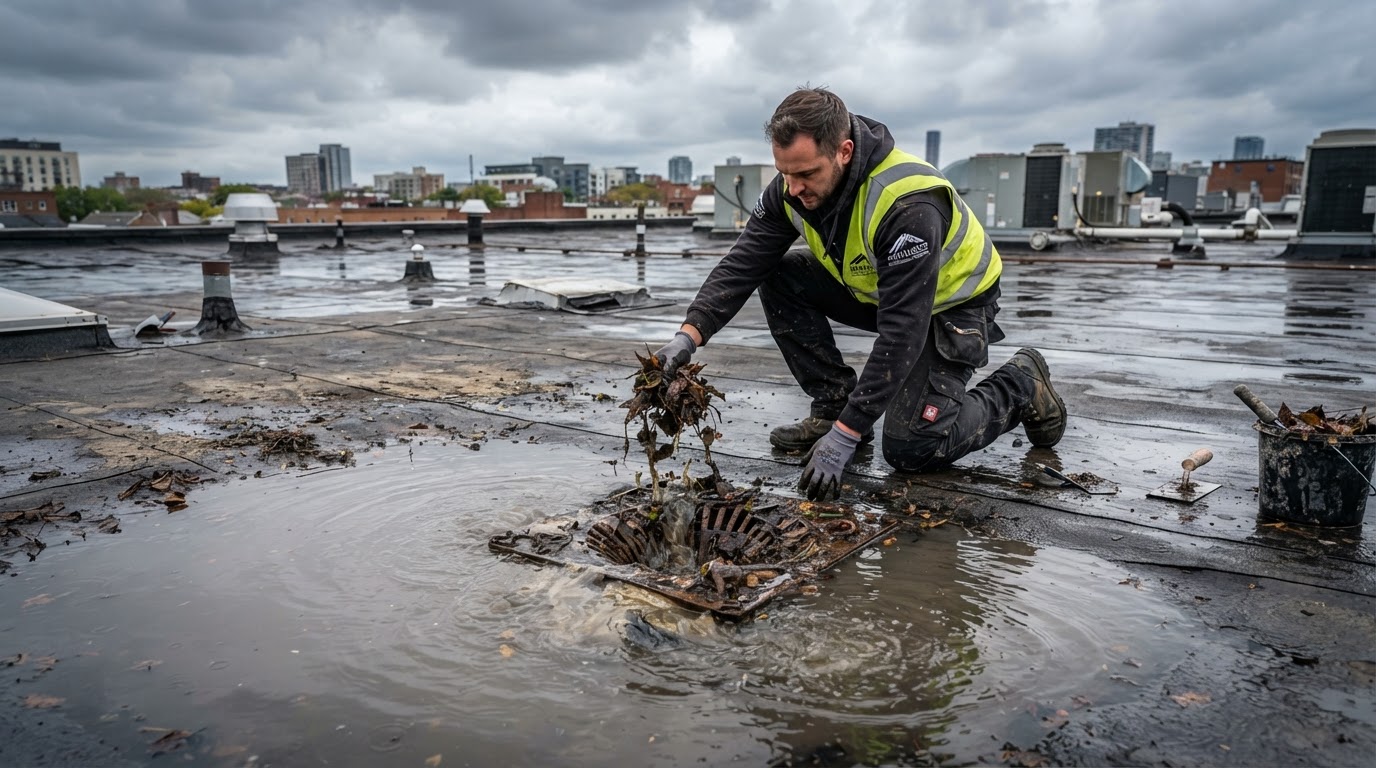
Do puddles stick around on your roof for a little too long after the latest storm has passed? You might be dealing with a case of roof ponding. Ponding is more than just an aesthetic issue; it's a threat to the structural integrity of your commercial roofing systems. Over time, stagnant water can degrade roofing materials, causing a roof leak that can seep into the interior of the building. Not only will this damage the roof membrane but also the underlying roof insulation, leading to costly repairs.
Moreover, the weight of standing water can strain the roof structure, potentially leading to collapse in severe cases. Stagnant water can also become a breeding ground for algae and insects, posing health risks to your building's occupants.
Tip #1: Select the Right Materials
The best way to prevent roof damage is to make smart choices during initial construction or re-roofing. One critical aspect is selecting suitable roofing materials. Some materials, such as PVC or TPO single-ply membranes, are highly resistant to water damage and standing water, withstanding harsh weather conditions effectively.
Tip #2: Implement a Slight Slope
A flat commercial roof shouldn't be completely flat; it should have a slight slope (typically 1/4" to 1/2" per foot) to facilitate water runoff. Over time, a roof can lose its slope due to settling or sagging. Tapered insulation systems can be added to restore proper pitch toward drainage points.
Tip #3: Ensure Proper Drainage
A well-designed drainage system—including internal drains, scuppers, and commercial gutters—channels water safely off the roof. Regular commercial roof maintenance prevents leaves, dirt, and debris from clogging drainage outlets.
Tip #4: Trust the Experts
Engaging a professional commercial roofing contractor ensures that your drainage and membrane systems are suited to your building's exact requirements. Contact our commercial roofers in Claymont, DE for expert inspections and maintenance.